
USE CASE
Pigment for Demand Planning
Pigment combines best-practice workflows with the flexibility to fit how the business actually plans, and agents that detect change, show its impact, and help you act sooner.
Trusted by

"What I see with Pigment is that the flexibility really allows you to model whatever you need to serve you best."
Adeeb Ali


“We chose Pigment for its flexibility and capabilities allowing us to run multiple what-if scenarios in a post Covid and changing retail environment."
Marianne Vandeville


"I used to block two weeks every summer just to build the strategic plan. Now, if everyone sends their inputs on time, I can do it in a day."
Sophie Hun


“The main KPI we wanted to improve was around forecast accuracy and we improved by 20% to 25%.”
Fabien Gibot



"Tariffs are the single biggest area of focus for Evenflo [...], we're constantly modeling scenarios to determine how much cost we can absorb. In a fast-changing environment like this, having a tool that lets us rapidly model the P&L impact and pivot our strategy is absolutely essential."
Kate Dolph

Why choose Pigment for Demand Planning
Reforecast in hours, plan from one number, and go live in months.

Planning agility
Reforecast and run scenarios as fast as the market moves.
One consensus demand plan
Every function submits into the same plan, so the review starts from one number.
Fast time to value
Start from the workflow, then extend it yourselves as the business changes.
How it works
From baseline to consensus, in one connected model
Three views planners actually work from every week.

01
Prior-week hindsighting
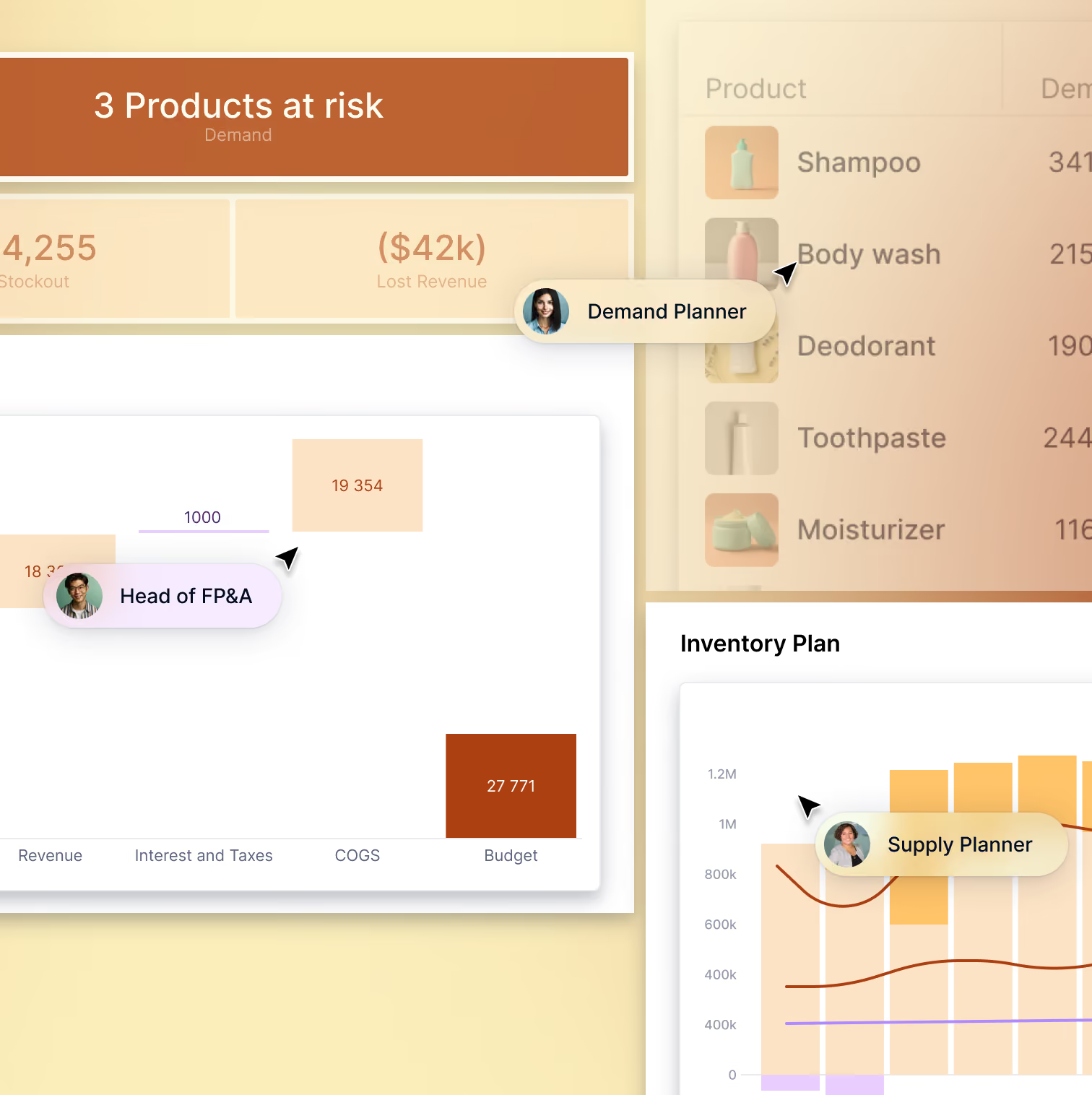
AI ranks the hotspots and explains what moved. Clean up history and outliers in the same place, so the next forecast starts from a baseline you trust.
02
Consensus demand inputs
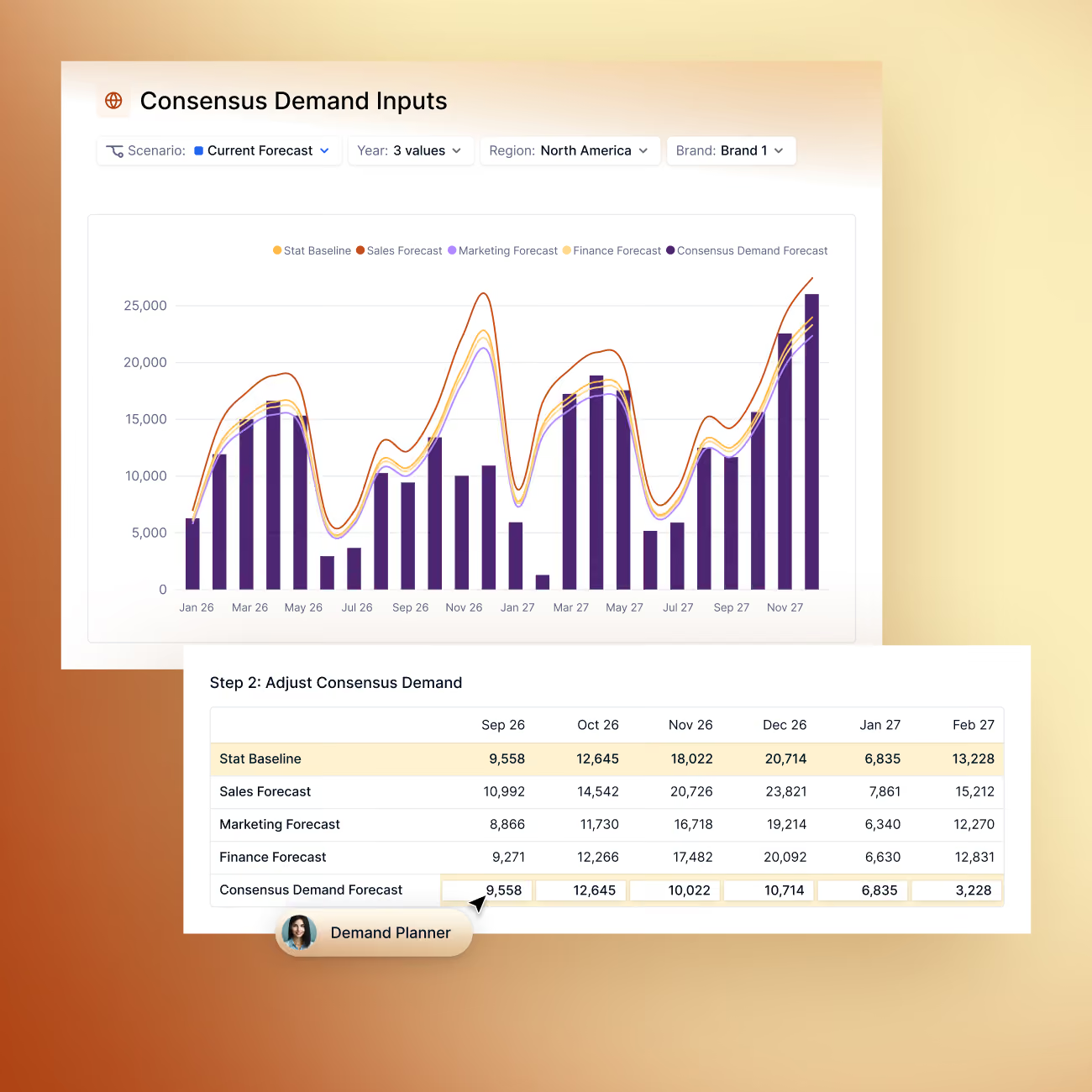
Your hierarchies, calendars, and promotions are modelled the way you actually run them, so a brand-level override and a region-level override reconcile against each other automatically, not in a follow-up meeting.

03
Demand review
Sales, marketing, finance, and supply chain submit into the same plan, so the review starts with all inputs in mind. Forecast value add and the gap to financial targets sit in the same view, so you see which inputs are moving the plan.
AI
An AI ecosystem built into every planning solution
Bring your own agent via MCP
Use your enterprise AI tools such as Claude, ChatGPT, Microsoft Copilot directly with Pigment, instead of being locked into a single interface.

Connect agents to get the full business context
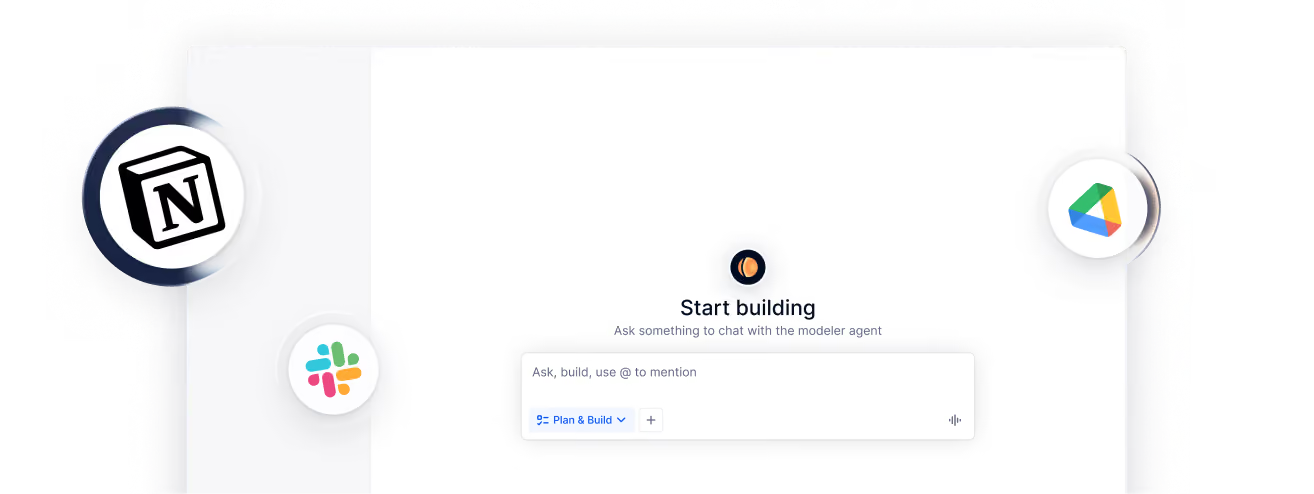
Draw on context from systems like Notion, Google Drive, and Slack, so recommendations are grounded in what's actually happening across the business.

Modeler Agent
Build and adapt your application
From natural language prompts, the Modeler Agent builds and adapts hierarchies, business logic, and workflows, ensuring your planning model evolves with your business.

Analyst Agent
Monitor, explain, and automate
The Analyst Agent lets you watch performance, explain what's happening, and recommend the next step, so planners spend their time deciding.

Planner Agent
Explore every possibility
With the Planner Agent, build what-if scenarios, explore and compare different options, and get recommendations on the best course of action, while keeping planners in control of the final decision.
Customer spotlight
Danone strengthens strategic demand planning through scenario modeling
2 wk → 1 day
To build the long-range plan
3 mo
From blank page to rollout, fully customized
10
Versions of the model tested in a single day during build
“Planners can now compare projected load with available capacity for each factory, technology, and format, and directly adjust allocations. This resolves a long-standing disconnect between demand planning and supply constraints.”
Sophie Hun

Key features
Pigment natively supports your core consolidation needs, including:
Consensus forecasting
Statistical and ML forecasting
Product lifecycle planning
Historical data cleansing and outlier correction
Forecast performance analysis
What-if demand scenarios / risk management
Discover more Supply chain use cases


Frequently Asked Questions
How do AI agents help with demand and inventory planning in Pigment?
The Analyst Agent monitors demand and inventory metrics, flags risks such as stockouts and can deliver recurring reports. Predictions adds machine learning forecasts from your live data. The Modeler Agent builds or extends the model from a plain-language request, for example adding a distribution center, and you approve its plan before it changes anything. The Planner Agent, which will simulate scenarios and recommend actions, is coming soon.
What is the difference between demand planning and inventory planning?
Demand planning forecasts how much customers will buy, using history, seasonality and commercial inputs. Inventory planning decides how much stock to hold, and when to replenish, to meet that demand at the service level you want. Pigment connects both in one model, so a change in the demand forecast updates inventory needs and the financial impact.
What features should I look for in demand planning software?
Look for forecasting that learns from data (statistical and machine learning), collaborative planning, scenario modeling, integration with your existing systems and real-time analysis. Also check how AI is governed: whether changes need your approval, whether actions are traceable, how permissions apply and how your data is used. Ask each vendor to demonstrate the capability on a real workflow.
What results have Pigment customers seen in demand and inventory planning?
Customers report measurable gains. Ankorstore improved forecast accuracy by 20% to 25%, and Cheerz reduced its stock levels by 30% on average in the year after adopting Pigment. Danone replaced a fragmented Excel process with a planning engine that compares projected load with available capacity by factory. Results depend on your data and processes.
How can Pigment support my demand and inventory planning needs?
Pigment gives finance, sales, marketing and supply chain teams one platform to forecast demand, plan inventory and test scenarios. Statistical and machine learning forecasts provide the baseline, planners add commercial inputs, and the Modeler Agent extends the model when your needs change. Frames builds the views your leaders ask for on the live plan.
Can I try Pigment for demand and inventory planning for free?
Yes. Sign up for the 14-day free trial, tell the AI agent you want to plan demand and inventory, and it builds a first model and board in your private workspace within minutes. Upload your own sales and stock data or start from an industry dataset, then change assumptions and run scenarios. No credit card is required, and usage limits apply.
See Pigment in action
The fastest way to understand Pigment is to see it in action. Sign up today and explore how agentic AI can transform the way you plan.


From 8 days to 4 min
Update P&L actuals & financial forecasting

80%
Time cut on data aggregation

12 hours
Saved per month on executive reporting

6 days faster
For scenarios creation and analysis


